
- Working with AI isn't about mastering a system; it's about staying curious.
- The people who thrive with AI bring context. They figure out when to push, when to pause, and how to keep moving when the output shifts.
- True skill shows in how people approach what they don't know, respond to what they learn, and keep others moving with them.
Hiring has long been built on the appearance of proof.
Degrees, company names, and titles have been treated as reliable signals of skill. As if a past outcomes automatically guarantees future performance. Those markers once worked as shortcuts when the world of work changed slowly and success followed stable paths.
That stability is gone. Tools, roles, and expectations shift while the work is still in progress. The signals hiring has relied on can't keep up with that pace.
Expertise still matters, but it ages fast. In this landscape what lasts is the ability to stay oriented while everything is in motion. The people who make progress aren't the ones claiming to have the answer. They're the ones who keep finding the next useful question.
Why "Up-Skilling" Misses the Point
"Up-skilling" implies people need new abilities to stay relevant.
Most don't. They're using the same skills they've always had. Judgment, communication, problem-solving. Just in new contexts.
People are already adapting. What's called "up-skilling" is often just learning how familiar abilities work inside unfamiliar systems.
The mistake is assuming that change exposes a lack of skill. More often, it exposes how narrowly organizations have been looking for it.
What AI Actually Rewards
AI has changed the rhythm of work.
Answers appear quickly, but they aren't always right. The people who get the most from these tools don't just move faster; they think more deliberately. They test, compare, and decide what to trust.
Good teams make sense of what the tool produces together: asking better questions, spotting weak assumptions, and translating results into action.
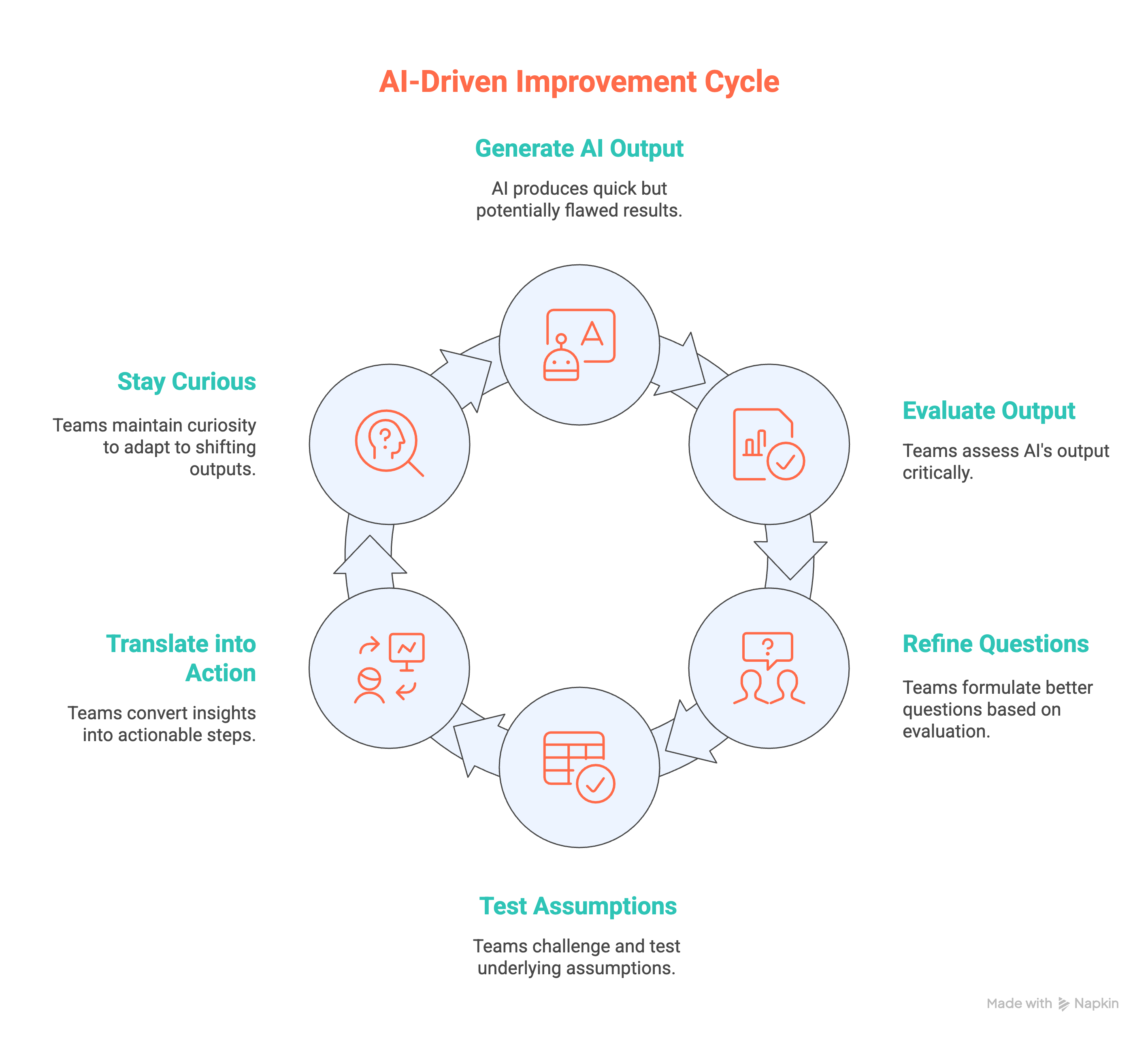
The work isn't about mastering a system; it's about staying curious. The people who do that well bring context. They know when to push, when to pause, and how to keep moving when the output shifts.
How Hiring Can Catch Up
Most hiring tools still measure what people claim to have done instead of how they actually work. But now more than ever, the value of the candidate lives in how they learn, reason, and adapt in realtime.
Job descriptions are often recycled from past openings. They assume a role should look the way it did before and search for someone who fits that mold. But when the work itself keeps changing, repeating old templates only narrows what's possible.
True skill shows in how people approach what they don't know. How they respond to what they learn, and how they keep themselves and others moving. Hiring will only catch up when it values the 'how,' not just the 'what.'
Designing Teams for Continuous Adaptation
Adaptability grows in teams that share what they learn. When people can explain their choices and compare results, the whole group gets better at reading change.
Diversity strengthens that process. Different perspectives surface more variables, more ways to interpret what's happening. But diversity only works when teams have the structure to use it. Clear goals, psychological safety, and space to adjust based on what they learn together.
The goal shouldn't be to build teams that never miss. It should be to build teams that recover quickly, learn openly, and keep moving.
Those are the teams that will thrive as AI continues to evolve.